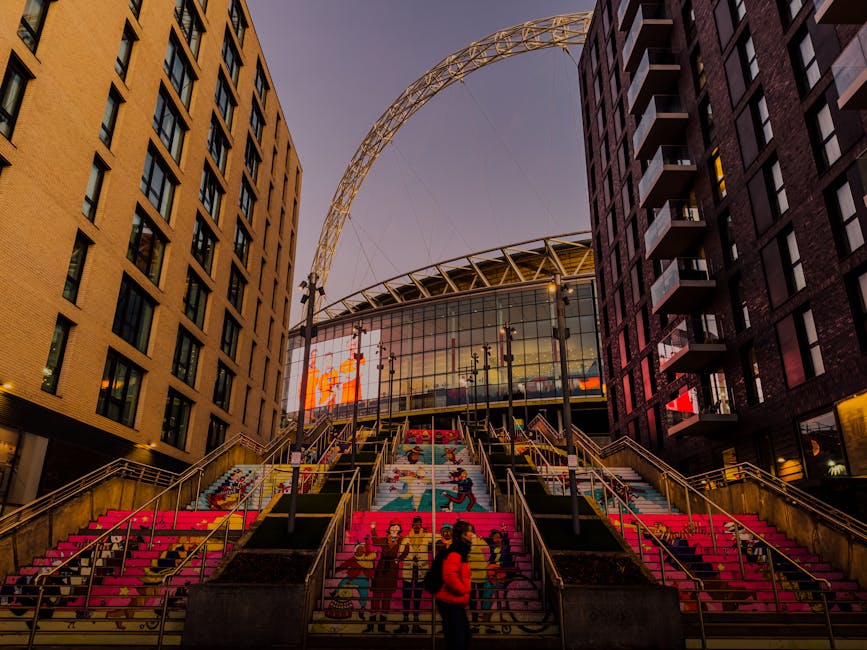
Wembley Stadium event rubbish clearance North West London
Big events at Wembley have a way of leaving a mess behind. One minute the stadium area is buzzing with fans, traders, and staff; the next, you are looking at bags of mixed waste, food packaging, broken cardboard, plastic cups, event signage, and the odd awkward item that nobody quite claims. If you need Wembley Stadium event rubbish clearance North West London, the real challenge is not just collecting the waste. It is clearing it quickly, safely, and in a way that keeps the site tidy for reopening, clean-down checks, and the next wave of visitors.
That is what this guide is for. We will walk through how event rubbish clearance works around Wembley Stadium, why it matters so much in North West London, who it suits, what the common pitfalls are, and how to plan a smoother clearance from start to finish. If you are managing an event, supporting a venue team, or simply trying to get an external area back into shape after a busy day, this will give you a clear, practical overview. No fluff. Just the stuff that helps.
For wider support across the area, many organisers also look at North West London clearance services when coordinating multiple collection points, and at rubbish removal or waste collection depending on the type and volume of waste involved.
Why Wembley Stadium event rubbish clearance North West London Matters
Event waste around Wembley Stadium is not the same as an ordinary household clear-out. It is time-sensitive, public-facing, and often spread across a wider footprint than people expect. You may have bins near entrances, spillover waste around catering points, back-of-house rubbish, packaging from temporary set-up, and leftover items from breakdown. If any of that lingers, it quickly affects presentation, safety, and the pace of the next operational step.
And let's face it, Wembley is not a place where tidiness is a small detail. It sits in a busy part of North West London, so waste can become visible very quickly. Pedestrian routes matter. Servicing access matters. Queue management matters. Even a few loose bags or stacked cartons can create a bottleneck, and that can feel messy fast when crowds are moving in waves.
Good event clearance also supports the wider reputation of the organiser. It signals control. It tells staff, vendors, and visitors that the event is being handled properly. That can be the difference between a smooth close-down and a late-night scramble with tired people trying to sort everything at once. Truth be told, that second version is rarely fun for anyone.
For sites with mixed waste streams, it is often worth linking the clean-up plan to a broader waste clearance approach rather than treating each pile as a separate problem. That usually makes the operation calmer and easier to manage.
How Wembley Stadium event rubbish clearance North West London Works
In practical terms, event rubbish clearance is a planned collection and removal process. It usually starts before the event even finishes. The best crews do not wait until the area is fully blocked with waste; they stage collections, monitor full bags, and keep an eye on what is building up where. That matters because event rubbish gets heavy, mixed, and awkward far quicker than people think.
A typical Wembley Stadium clearance may involve a combination of bagged litter, cardboard, mixed recyclables, food waste, disposable service items, and bulky event leftovers such as temporary signage, broken furniture, or worn display materials. Depending on the event, there may also be items from fit-out or de-rig. If the event had structures, staging, or promotional units, you may need support that overlaps with builders waste handling as well as standard rubbish removal.
The process usually follows a straightforward sequence:
- Site review - identify the waste points, access routes, and any restrictions.
- Waste separation - decide what is general waste, recyclable material, reusable items, or bulky disposal.
- Collection staging - keep bags and items in agreed holding areas so they do not clutter walkways.
- Load and remove - transfer waste efficiently, often in multiple runs if volumes are high.
- Final sweep - check corners, loading points, and any hidden build-up around barriers or hospitality zones.
In real life, the most successful clearances are the ones that stay flexible. A quiet afternoon collection may suddenly turn into a fast-moving extraction once a bar area empties or a sponsor activation closes. You need enough structure to stay safe, but enough agility to respond when the pace changes.
Key Benefits and Practical Advantages
The first benefit is obvious: a cleaner site. But that is only the surface. The real value of a professional event clearance is operational. It reduces stress for staff, keeps public areas safer, and helps the venue or organiser move on to the next phase without a long delay.
Here are the most useful advantages in plain English:
- Faster turnaround after the event ends.
- Cleaner public areas with less visible clutter around busy paths and exits.
- Lower manual handling risk when heavy bags and bulky items are moved properly.
- Better control of mixed waste so recyclables and general waste do not get tangled unnecessarily.
- Less disruption for neighbours, traders, and nearby businesses in North West London.
- More predictable close-down because the waste plan is built into the event plan.
There is also a confidence benefit that people often underestimate. If the venue team, production team, and vendors know there is a tidy system for waste removal, they tend to work more calmly. It sounds simple, but a calm end-of-event operation can save you from that slightly frantic atmosphere where everyone is saying, "whose bag is that?" and nobody really knows.
Where events involve visitor-facing zones, it can also help to think about related services such as rubbish clearance for fast general removal and rubbish collection for routine pickup of accumulated bags during or after the event.
Who This Is For and When It Makes Sense
Event rubbish clearance around Wembley Stadium is relevant to a wide mix of people. Not just large stadium operators. In fact, smaller organisers often need it just as much, because they may not have much internal capacity to deal with a lot of waste at the end of a busy day.
This service usually makes sense for:
- Event organisers managing concerts, sports fixtures, launches, or fan events.
- Catering teams dealing with packaging, food waste, and service station waste.
- Production crews clearing temporary materials, staging leftovers, and set-up waste.
- Hospitality operators who need fast reset between event windows.
- Venue support teams handling post-event close-down.
- Market, promo, and activation teams who bring in displays, furniture, or branded items.
If your event includes furniture, seating, or front-of-house items that need removing, it can also overlap with furniture disposal. And if there are sofas, lounge pieces, or heavier soft furnishings involved, the specialist sofa removal option may be a better fit.
When does it make sense to bring in help rather than handle waste internally? Usually when the waste is bulky, the time window is tight, the site has restricted access, or your team already has enough on its plate. Which, to be fair, is most event days.
Step-by-Step Guidance
If you want the process to run well, it helps to treat event rubbish clearance as part of the event plan, not an afterthought. Here is a straightforward way to approach it.
1. Map the waste before the event begins
Start by identifying where waste will accumulate. Think about catering zones, entrances, hospitality areas, back-of-house lanes, temporary stores, and any public spaces likely to collect litter. You do not need an elaborate diagram. A clear list is enough if it is accurate.
2. Match containers to the waste type
Different waste needs different handling. General litter is not the same as cardboard, food waste, or bulky material. If you are putting everything into the same bag, you may be making the collection slower than it needs to be. Simple segregation can make the whole process smoother, especially once the event winds down.
3. Agree access and timing in advance
Wembley and the surrounding roads can get busy. So can loading areas. Make sure collection windows, parking needs, and internal access arrangements are understood before the pressure starts. This is one of those boring admin steps that saves a lot of grief later. Boring, yes. Useful, absolutely.
4. Keep holding areas tidy
Where waste is staged, keep it contained. Piles drift. Bags split. Cardboard gets wet or blown around. A good holding point should be close enough for efficiency but far enough from public movement to stay safe and neat.
5. Remove waste in phases if needed
For larger events, phased clearance is often better than one giant end-of-night sweep. You may need a pre-close collection, a post-close load-out, and a final tidy the next morning. That depends on the event size, but it is often the cleanest method.
6. Finish with a proper final check
Always check the less obvious spots: behind barriers, under temporary counters, beside bins, near cable runs, and around service corridors. Small leftover mess tends to hide in those places, and then everyone notices it five minutes after the site "looked finished".
Expert Tips for Better Results
A few small habits can make a big difference to event rubbish clearance. These are the things that tend to separate a smooth operation from a slightly chaotic one.
- Use one person to control the waste plan. Too many decision-makers slows everything down.
- Label holding zones clearly. Even simple tape or signs can reduce confusion.
- Pre-brief vendors and contractors. They need to know where waste goes and when it moves.
- Keep an eye on wet waste. Once food waste or drinks soak into cardboard, handling gets messy fast.
- Do not leave bulky items until the end. They have a habit of becoming the biggest problem at the worst time.
- Plan for a bit of spillover. Events rarely produce waste in neat, predictable quantities. It would be nice, but no.
One practical detail people miss: the last ten percent of a clean-down can take disproportionate time. The visible bulk is easy. The edge cases are not. That is why the best crews stay alert right to the end, when everyone else is thinking about home.
For venues and organisers who also manage regular operations outside event days, it can help to keep business waste support in mind alongside one-off event clearance. That gives you a more joined-up approach rather than piecemeal fixes.
Common Mistakes to Avoid
Most clearance problems are avoidable. Usually they come from rushing, poor planning, or assuming the waste will be simpler than it is. It rarely is.
- Underestimating volume - a modest crowd can still generate a surprising amount of waste.
- Mixing every waste type together - this can slow loading and make disposal less efficient.
- Leaving clearance too late - once the site is packed down, waste becomes harder to move.
- Blocking access routes - even a temporary pile can create avoidable delays and safety issues.
- Not briefing staff - if people do not know the waste plan, they improvise.
- Forgetting final checks - the hidden leftovers are what people remember.
Another common issue is assuming that every item can be treated the same way. In reality, a mix of packaging, food residue, furniture, and event hardware may need separate handling. That is where a clearer waste strategy pays off. Not glamorous, but useful. Very useful.
Tools, Resources and Recommendations
You do not need a truckload of specialist equipment to run a decent event clearance, but you do need the right basics. Simplicity works when it is well organised.
| Tool or resource | What it helps with | Why it matters |
|---|---|---|
| Heavy-duty waste bags | General rubbish and mixed lightweight waste | Reduces splitting and spillage during collection |
| Clearly marked holding area | Temporary storage before loading | Keeps routes open and waste contained |
| Hand truck or sack trolley | Moving heavier bags and compact items | Improves speed and reduces manual strain |
| Protective gloves and basic PPE | Safer handling of mixed waste | Useful for grip, hygiene, and minor hazards |
| Clear briefing sheet | Staff and contractor coordination | Stops confusion during busy periods |
If you are dealing with furniture or left-behind items after an activation, waste removal is often a sensible broader term for the service you need. And for everyday overflow or recurring site waste, waste disposal can be the better long-term framework.
One more recommendation: keep a small written log of what left the site and when. Nothing fancy. Even a basic note helps if there is a question later about what was cleared, what remained, and which zone needed extra attention.
Law, Compliance, Standards, or Best Practice
For event rubbish clearance in North West London, compliance is mostly about using sensible, lawful waste handling practices and not cutting corners. You do not need to overcomplicate it, but you do need to be careful.
In the UK, event operators and the people handling their waste should make sure waste is collected, stored, and transferred responsibly. In practical terms, that means using an appropriate carrier or contractor, keeping waste contained, avoiding unsafe storage, and making sure any material that could be reused or recycled is handled properly where possible.
Best practice usually includes:
- keeping waste segregated where feasible
- preventing litter escape into public areas
- avoiding blocked escape routes or emergency access points
- handling sharp, wet, or heavy waste with care
- using documented collection arrangements for larger jobs
There is also a simple reputational point here. Clean, orderly waste management is part of professional event delivery. It is not just about avoiding mess. It is about showing that the event has been planned with the real world in mind. That matters a lot in a place as visible as Wembley.
Where a site includes other clearance requirements, such as post-refit debris or temporary structures, it may also be sensible to coordinate with a service such as builders waste rather than treating every item as ordinary rubbish.
Options, Methods, or Comparison Table
There is more than one way to handle event waste. The right method depends on volume, timing, access, and how mixed the material is. Here is a simple comparison that helps with decision-making.
| Method | Best for | Strengths | Limitations |
|---|---|---|---|
| Internal team clearance | Small, low-risk events | Cheap, flexible, easy to start | Can become slow and physically demanding |
| Phased site clearance | Medium and large events | Reduces end-of-night pressure, keeps routes open | Needs planning and coordination |
| Dedicated rubbish removal support | Busy or high-volume event sites | Fast turnaround, less strain on staff | Requires schedule alignment |
| Mixed waste and bulky item pickup | Events with furniture, display pieces, or leftovers | Handles a wide range of material in one go | Needs clearer item sorting |
For many organisers, the sweet spot is a blended approach: keep routine litter under control during the event, then bring in a proper end-of-event collection for the heavier material. That tends to work better than trying to do everything at once, which sounds efficient until it isn't.
Case Study or Real-World Example
Picture a live event near Wembley Stadium on a busy evening. Catering units are open, fans are moving through the area, and by the final hour the waste points have filled up with cups, food trays, cardboard sleeves, and packaging from stock top-ups. There is also some branded display material that needs to come out before the site can be signed off.
Instead of waiting until everyone has gone, the organiser splits the clearance into phases. One crew member monitors bag fill levels, another controls where empty cartons are stacked, and a separate loading point is kept free for bulky items. By the time the main crowd leaves, the obvious waste is already under control. The final sweep is still busy, but it is manageable rather than overwhelming.
That sort of setup is often what makes a good event feel seamless. Not flashy. Just properly run. You might not even notice it if it works well, and that is usually the point. The evening ends, the area clears, and people get on with their lives without a pile of rubbish reminding them the next morning what happened the night before.
In a slightly more complex version of the same job, a few office-style items or leftover seating units might also need support from office clearance or flat clearance style approaches if temporary accommodation or backstage spaces are being emptied. The core principle stays the same: separate, stage, load, and sweep properly.
Practical Checklist
Use this checklist before, during, and after event waste clearance at Wembley Stadium.
- Confirm what waste types the event will generate.
- Map bins, holding points, and loading access in advance.
- Assign one person to oversee waste coordination.
- Brief catering, production, and support staff on where waste goes.
- Keep walkways, exits, and service routes clear.
- Separate bulky items from bagged rubbish where possible.
- Remove full bags before they become too heavy or split.
- Check hidden areas, corners, and behind temporary structures.
- Use appropriate handling equipment and PPE.
- Confirm the site is tidy before final handover.
Quick takeaway: the cleaner the plan, the quicker the clear-down. That really is the whole game.
Conclusion
Wembley Stadium event rubbish clearance North West London is about more than taking waste away. It is about control, safety, timing, and making sure a high-profile event ends as professionally as it began. When the waste plan is built in early, the whole operation feels lighter. Staff stay calmer, access stays clearer, and the final handover is far less stressful.
Whether you are dealing with mixed litter, catering waste, bulky items, or a combination of all three, the best approach is usually the same: plan early, stage properly, and remove waste in a way that suits the event rather than fighting against it. Small things add up. A tidy route, the right bag setup, and one person keeping an eye on the details can save you a lot of time.
If you are looking for a practical, local way to handle event waste in North West London, choose a clearance approach that fits the scale of the job and the pace of the day. It should feel straightforward. Not perfect, just properly thought through. That is usually enough to make a busy event end on a good note.
Get a free quote today and see how much you can save.
Frequently Asked Questions
What is Wembley Stadium event rubbish clearance North West London?
It is the organised removal of waste generated by events at or around Wembley Stadium, including litter, packaging, food waste, bulky items, and leftover event materials. The aim is to clear the site safely and efficiently.
How quickly can event rubbish be cleared after a Wembley event?
That depends on the amount of waste, site access, and how the event was planned. Smaller clearances can be turned around quickly, while larger events often need phased collection or a longer close-down window.
Is event waste different from regular rubbish removal?
Yes. Event waste is usually more mixed, more time-sensitive, and more exposed to public areas. It often includes catering waste, temporary signage, and bulky items that need more coordination than standard domestic rubbish.
Do I need a special plan for bulky event items?
Usually, yes. Bulky items such as furniture, staging leftovers, or large display pieces need a separate handling plan so they do not block access routes or slow down the final sweep.
Can event rubbish clearance include recycling?
It often can, depending on how the waste is separated on site. Cardboard, some plastics, and other material streams may be easier to manage if they are kept apart from general waste from the start.
What happens if waste is left until the end of the event?
It tends to pile up, become heavier, and slow the clearance process. In busy areas like Wembley, late waste removal can also make the site look untidy and create unnecessary congestion.
Is this suitable for smaller events too?
Absolutely. Even smaller activations, hospitality set-ups, or fan events can create more waste than expected. A simple clear-up plan can save a lot of time and awkward lifting later.
What should be prepared before the clearance team arrives?
Have the waste types identified, access routes agreed, and a holding area ready. It also helps to brief staff on where waste should go so everything is not left to guesswork at the end.
Can event rubbish clearance help reduce safety risks?
Yes. Keeping waste out of walkways, reducing heavy bag handling, and removing sharp or unstable items all help lower the chance of accidents or site obstruction.
How do I choose between rubbish clearance and waste disposal services?
If you need fast, practical removal from the site, rubbish clearance is often the better fit. If you are dealing with a broader waste management need, waste disposal may be the more suitable overall term and service approach.
What are the most common mistakes people make with event waste?
The biggest ones are underestimating waste volume, mixing all items together, blocking access points, and leaving the final check too late. Those four issues cause most of the avoidable stress.
When should I book event rubbish clearance for Wembley?
The sooner the better, especially for busy dates or events with tight turnaround times. Booking early gives you more flexibility on timing, access, and how the clearance is staged.
If you are planning an event nearby and want a smoother clean-down, it is worth taking the waste plan seriously from day one. It keeps the whole thing easier to manage, and that is no small thing on a packed Wembley schedule.